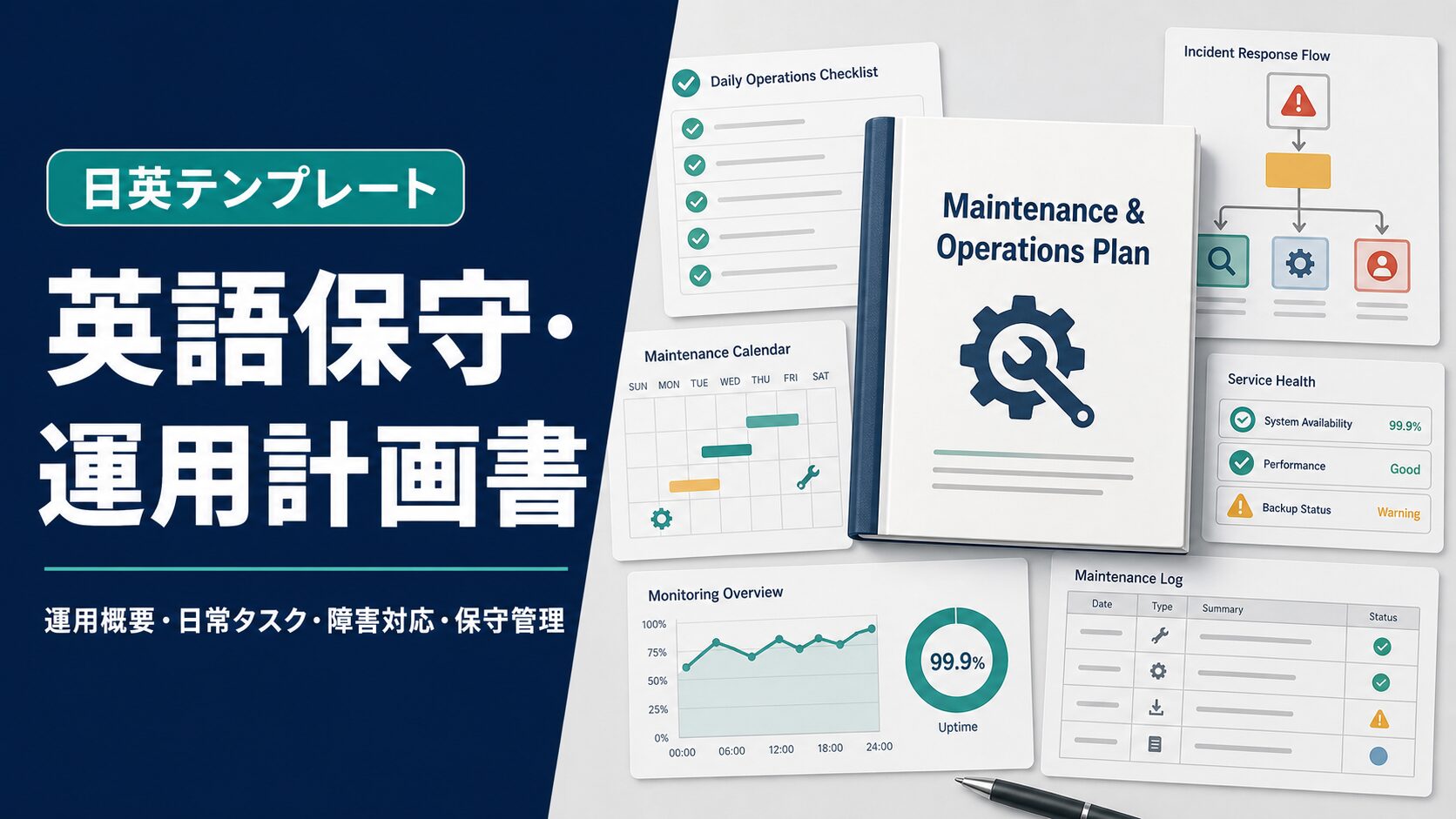
グローバルITプロジェクトで本番リリース後の保守・運用をどう英語で文書化しているだろうか。
「リリースしたら開発チームの仕事は終わり」という認識では、インシデント発生時に混乱が起きる。英語圏のプロジェクトでは、保守・運用計画書(Maintenance & Operations Plan)が本番稼働開始前に必須のドキュメントとして機能する。
この記事では、保守・運用計画書に必要な4つのセクションを日英テンプレート付きで解説する。Word形式のテンプレートをダウンロードしてそのまま使えるので、初めて英語で保守・運用計画書を作る人にも役立つ。
保守・運用計画書に必要な4つの構成要素
英語の保守・運用計画書は、次の4セクションで構成する。
- 運用概要(Operations Overview):運用体制・サービスレベル・責任範囲を定義する
- 日常運用タスク(Routine Operations):定期メンテナンス・監視・バックアップの手順を整理する
- 障害対応(Incident & Problem Management):インシデント対応フローと問題管理の手順を定める
- 保守管理(Maintenance Management):パッチ・変更・廃棄の管理ルールを定める
各セクションを順番に埋めていけば、英語の保守・運用計画書が完成する。
テンプレートをダウンロード(Word)
日本語版・英語版のWordテンプレートをそれぞれ用意した。ダウンロードしてプロジェクト情報を入力するだけで使える。
日本語版テンプレート(コピペOK)
基本情報
| 項目 | 内容 |
|---|---|
| システム名 | |
| 作成者 | |
| 作成日 | |
| バージョン | v1.0 |
| 運用開始日 |
セクション1:運用概要
運用体制
| 役割 | 担当者/チーム | 責任範囲 | 連絡先 |
|---|---|---|---|
| 運用責任者 | |||
| インフラ運用 | |||
| アプリケーション運用 | |||
| セキュリティ運用 | |||
| サービスデスク |
サービスレベル目標
| 指標 | 目標値 | 測定方法 | 報告頻度 |
|---|---|---|---|
| 稼働率(Availability) | 99.9% | 監視ツール | 月次 |
| 計画停止(Planned Downtime) | 月4時間以内 | メンテナンスウィンドウ | 月次 |
| インシデント初動時間(P1) | 15分以内 | チケットシステム | 都度 |
| インシデント解決時間(P1) | 4時間以内 | チケットシステム | 都度 |
| バックアップ成功率 | 100% | バックアップツール | 日次 |
対応時間
| サポートカテゴリ | 対応時間 | 担当 |
|---|---|---|
| P1(システム停止) | 24時間365日 | オンコール担当 |
| P2(主要機能停止) | 営業時間内(8:00〜22:00) | 運用チーム |
| P3(軽微な障害) | 営業時間内 | サービスデスク |
| 定常問い合わせ | 翌営業日 | サービスデスク |
セクション2:日常運用タスク
監視タスク
| # | タスク | ツール | 頻度 | 担当 | アラート先 |
|---|---|---|---|---|---|
| 1 | サーバーリソース監視(CPU/メモリ/ディスク) | リアルタイム | |||
| 2 | アプリケーション死活監視 | 5分ごと | |||
| 3 | ネットワーク監視 | リアルタイム | |||
| 4 | セキュリティログ監視 | リアルタイム | |||
| 5 | パフォーマンス監視 | 15分ごと |
定期メンテナンスタスク
| # | タスク | 頻度 | 担当 | メンテナンスウィンドウ |
|---|---|---|---|---|
| 1 | OSパッチ適用 | 月次 | ||
| 2 | アプリケーションパッチ適用 | 月次 | ||
| 3 | SSLcertificates更新確認 | 月次 | ||
| 4 | ディスク容量レビュー | 週次 | ||
| 5 | アクセス権限棚卸し | 四半期 | ||
| 6 | バックアップデータ復元テスト | 四半期 | ||
| 7 | 災害復旧訓練 | 年次 |
バックアップ計画
| 対象 | バックアップ種別 | 頻度 | 保持期間 | 保管場所 |
|---|---|---|---|---|
| データベース(フル) | フルバックアップ | 週次(日曜) | 4週間 | |
| データベース(差分) | 差分バックアップ | 日次 | 7日間 | |
| アプリケーション設定 | スナップショット | 変更時 | 3世代 | |
| ログファイル | アーカイブ | 日次 | 90日間 |
セクション3:障害対応
インシデント重大度定義
| 重大度 | 定義 | 初動目標 | 解決目標 |
|---|---|---|---|
| P1(Critical) | 本番システム全停止・全ユーザー影響 | 15分 | 4時間 |
| P2(High) | 主要機能停止・多数ユーザー影響 | 30分 | 8時間 |
| P3(Medium) | 一部機能停止・限定的ユーザー影響 | 2時間 | 24時間 |
| P4(Low) | 軽微な問題・回避策あり | 翌営業日 | 5営業日 |
インシデント対応フロー
| ステップ | アクション | 担当 | ツール |
|---|---|---|---|
| 1. 検知 | アラート受信・初期トリアージ | 監視担当 | 監視ツール |
| 2. 記録 | インシデントチケット作成・重大度設定 | 監視担当 | チケットシステム |
| 3. エスカレーション | 重大度に応じた担当チームへの通知 | サービスデスク | PagerDuty等 |
| 4. 調査 | 根本原因の特定・暫定対応 | 担当エンジニア | ログ・監視ツール |
| 5. 解決 | 恒久対応・サービス復旧 | 担当エンジニア | |
| 6. クローズ | 解決確認・チケットクローズ | サービスデスク | チケットシステム |
| 7. 事後レビュー | P1/P2はポストモーテム実施 | PM・担当チーム |
セクション4:保守管理
変更管理ルール
| 変更種別 | 承認者 | 実施可能時間 | リードタイム |
|---|---|---|---|
| 緊急変更(Emergency) | 運用責任者 | いつでも | 即時 |
| 通常変更(Standard) | 変更承認委員会 | メンテナンスウィンドウ | 1週間前 |
| 軽微変更(Minor) | 運用リード | 営業時間内 | 2営業日前 |
パッチ管理ポリシー
| パッチ種別 | 対応期限 | テスト要件 |
|---|---|---|
| 緊急セキュリティパッチ | 7日以内 | 本番適用前にステージングでテスト |
| 重要パッチ | 30日以内 | テスト環境でテスト完了後 |
| 通常パッチ | 90日以内 | テスト環境でテスト完了後 |
英語版テンプレート(コピペOK)
Basic Information
| Item | Details |
|---|---|
| System Name | |
| Prepared By | |
| Date | |
| Version | v1.0 |
| Operations Start Date |
Section 1: Operations Overview
Operations Team
| Role | Team/Person | Responsibilities | Contact |
|---|---|---|---|
| Operations Manager | |||
| Infrastructure Operations | |||
| Application Operations | |||
| Security Operations | |||
| Service Desk |
Service Level Objectives
| Metric | Target | Measurement | Reporting |
|---|---|---|---|
| Availability | 99.9% | Monitoring tool | Monthly |
| Planned Downtime | ≤ 4 hours/month | Maintenance window | Monthly |
| Incident Response Time (P1) | ≤ 15 minutes | Ticketing system | Per incident |
| Incident Resolution Time (P1) | ≤ 4 hours | Ticketing system | Per incident |
| Backup Success Rate | 100% | Backup tool | Daily |
Support Hours
| Support Category | Hours | Owner |
|---|---|---|
| P1 (System down) | 24×7 | On-call engineer |
| P2 (Major function down) | Business hours (08:00–22:00) | Ops team |
| P3 (Minor issue) | Business hours | Service desk |
| General inquiries | Next business day | Service desk |
Section 2: Routine Operations
Monitoring Tasks
| # | Task | Tool | Frequency | Owner | Alert Recipient |
|---|---|---|---|---|---|
| 1 | Server resource monitoring (CPU/Memory/Disk) | Real-time | |||
| 2 | Application health check | Every 5 min | |||
| 3 | Network monitoring | Real-time | |||
| 4 | Security log monitoring | Real-time | |||
| 5 | Performance monitoring | Every 15 min |
Scheduled Maintenance Tasks
| # | Task | Frequency | Owner | Maintenance Window |
|---|---|---|---|---|
| 1 | OS patch application | Monthly | ||
| 2 | Application patch application | Monthly | ||
| 3 | SSL certificate renewal check | Monthly | ||
| 4 | Disk capacity review | Weekly | ||
| 5 | Access rights review | Quarterly | ||
| 6 | Backup restore test | Quarterly | ||
| 7 | Disaster recovery drill | Annually |
Backup Schedule
| Target | Backup Type | Frequency | Retention | Storage |
|---|---|---|---|---|
| Database (full) | Full backup | Weekly (Sunday) | 4 weeks | |
| Database (incremental) | Differential | Daily | 7 days | |
| Application configuration | Snapshot | On change | 3 generations | |
| Log files | Archive | Daily | 90 days |
Section 3: Incident & Problem Management
Incident Severity Definitions
| Severity | Definition | Response Target | Resolution Target |
|---|---|---|---|
| P1 (Critical) | Complete system outage; all users affected | 15 min | 4 hours |
| P2 (High) | Major function down; many users affected | 30 min | 8 hours |
| P3 (Medium) | Partial outage; limited user impact | 2 hours | 24 hours |
| P4 (Low) | Minor issue; workaround available | Next business day | 5 business days |
Incident Response Flow
| Step | Action | Owner | Tool |
|---|---|---|---|
| 1. Detect | Receive alert; initial triage | Monitoring team | Monitoring tool |
| 2. Record | Create incident ticket; set severity | Monitoring team | Ticketing system |
| 3. Escalate | Notify relevant team based on severity | Service desk | PagerDuty, etc. |
| 4. Investigate | Identify root cause; apply workaround | Engineers | Logs, monitoring |
| 5. Resolve | Apply permanent fix; restore service | Engineers | |
| 6. Close | Confirm resolution; close ticket | Service desk | Ticketing system |
| 7. Review | Conduct post-mortem for P1/P2 | PM & team |
Section 4: Maintenance Management
Change Management Policy
| Change Type | Approver | Allowed Window | Lead Time |
|---|---|---|---|
| Emergency Change | Operations Manager | Any time | Immediate |
| Standard Change | Change Advisory Board | Maintenance window | 1 week |
| Minor Change | Operations Lead | Business hours | 2 business days |
Patch Management Policy
| Patch Type | Deadline | Testing Requirement |
|---|---|---|
| Critical security patch | Within 7 days | Test on staging before production |
| Important patch | Within 30 days | Complete testing in test environment |
| Routine patch | Within 90 days | Complete testing in test environment |
各セクションの書き方と例文
セクション1:運用概要の書き方
サービスレベル目標は、SLAの内容と整合させることが重要だ。
運用概要の英文例:
- This plan defines the operational procedures and responsibilities for the [System Name] from go-live through end-of-life.
(本計画書は、[システム名]の本番稼働開始から廃棄までの運用手順と責任を定めるものである)
- The operations team is responsible for ensuring system availability meets the SLO of 99.9% uptime.
(運用チームは、システム稼働率がSLO 99.9%を満たすことを確保する責任を負う)
セクション2:日常運用タスクの書き方
監視タスクにはアラート閾値も設定しておくと、誤報の削減と対応の迅速化につながる。
日常運用の英文例:
- All monitoring alerts must be acknowledged within 5 minutes of firing.
(すべての監視アラートは発報から5分以内に確認しなければならない)
- Backup completion must be verified each morning as part of the daily operations checklist.
(バックアップ完了確認は、毎朝の日常運用チェックリストの一部として実施しなければならない)
セクション3:障害対応の書き方
インシデント対応フローは、Runbookと連動させると運用の一貫性が高まる。
インシデント対応の英文例:
- A P1 incident must be escalated to the on-call engineer within 15 minutes of detection.
(P1インシデントは検知から15分以内にオンコール担当エンジニアにエスカレーションしなければならない)
- All P1 and P2 incidents require a post-mortem report within 5 business days of resolution.
(すべてのP1/P2インシデントは解決後5営業日以内にポストモーテムレポートを作成しなければならない)
セクション4:保守管理の書き方
パッチ管理ポリシーにはリスクスコアリングも組み合わせると、優先度の判断が明確になる。
保守管理の英文例:
- All changes to the production environment must follow the change management procedure defined in this plan.
(本番環境へのすべての変更は、本計画書に定める変更管理手順に従わなければならない)
- Emergency changes must be reviewed and documented within 24 hours of implementation.
(緊急変更は実施後24時間以内にレビューと文書化を行わなければならない)
保守・運用計画書でよく使う英語表現
英語の保守・運用計画書で頻出する表現をまとめた。
| シーン | 英語表現 | 日本語訳 |
|---|---|---|
| 監視 | monitor system health | システムの状態を監視する |
| アラート対応 | acknowledge the alert | アラートを確認する |
| 障害対応 | respond to the incident | インシデントに対応する |
| 根本原因分析 | conduct a root cause analysis | 根本原因分析を実施する |
| パッチ適用 | apply the patch | パッチを適用する |
| 変更申請 | submit a change request | 変更要求を提出する |
| バックアップ | take a backup | バックアップを取得する |
| 復元 | restore from backup | バックアップから復元する |
まとめ:英語保守・運用計画書は4つのセクションで完成する
英語保守・運用計画書の4セクションをおさらいする。
- 運用概要(Operations Overview):運用体制・SLO・対応時間を定義する
- 日常運用タスク(Routine Operations):監視・メンテナンス・バックアップの手順を整理する
- 障害対応(Incident & Problem Management):インシデント対応フローと重大度定義を定める
- 保守管理(Maintenance Management):変更管理・パッチ管理のルールを定める
保守・運用計画書のSLO設定はSLAと整合させる必要がある。英語SLAの書き方と合わせて整備することで、ステークホルダーとの合意内容と運用目標が一貫したものになる。
また、障害対応の手順はRunbookとして別途整備すると、対応の属人化を防げる。英語Runbookの書き方と組み合わせて、インシデント対応体制を完成させてほしい。
コメント